What Is Bullet Resistant Glass?
Windows are the most vulnerable point in any building’s security envelope. Standard glass shatters instantly under ballistic impact, and even conventional tempered or laminated safety glass provides no meaningful protection against firearms. Bullet resistant glazing is purpose-engineered to absorb and disperse the kinetic energy of a projectile — stopping penetration, containing fragments, and keeping the people behind the glass safe while continuing to function as a normal, transparent window.
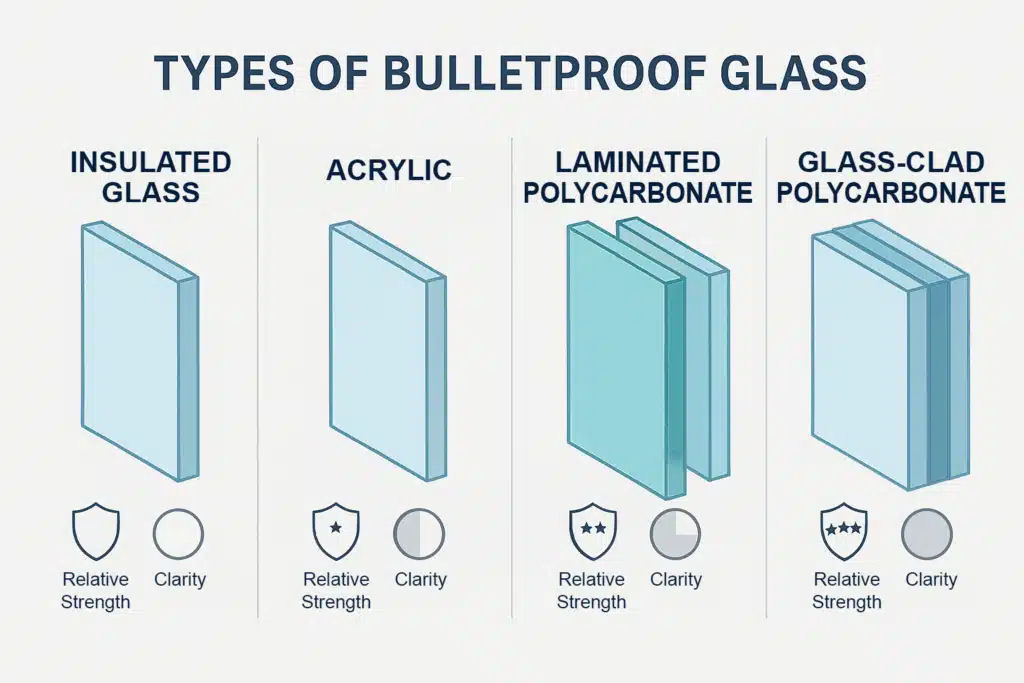
It is important to use the correct term: bullet resistant, not bulletproof. No security product, no matter what anyone says, is 100% bulletproof. The correct way to describe products that can stop one or more of a certain type of round fired by a specific type of firearm is bullet resistant. Bullet resistant glass is designed and rated for specific threat levels — and understanding those levels is essential to specifying the right product for your project.
MILLENNIUM® Windows and Doors designs, engineers, and installs custom bullet resistant glass window and door systems for residential, commercial, government, and institutional applications. Our systems integrate ballistic-grade glazing into thermally broken aluminum frames, delivering full security performance without sacrificing energy efficiency, aesthetics, or day-to-day functionality.
How Bullet Resistant Glass Is Constructed
Bullet resistant glazing is not simply thick glass. It is a precisely engineered laminate, typically built from one or more of the following materials combined in specific configurations:
Laminated glass — Multiple layers of glass bonded together with interlayers of polyvinyl butyral (PVB) or other structural polymers. When struck, the glass layers absorb and distribute the projectile’s energy while the interlayers hold the assembly together, preventing penetration and containing dangerous spall (glass fragments). Laminated glass is optically clear, highly durable, and available across a wide range of ballistic protection levels.
Polycarbonate — A high-performance thermoplastic that is extremely tough and impact-resistant. Polycarbonate is significantly lighter than glass and excels at absorbing and deflecting energy. It is often used as a backing layer in glass-clad polycarbonate systems, where the glass face resists the initial impact and the polycarbonate core absorbs the remaining energy and prevents penetration.
Glass-Clad Polycarbonate — A composite system combining a glass exterior with a polycarbonate interior. This combination delivers excellent ballistic performance at lower weight than all-glass laminates and is rated to the highest UL 752 protection levels available for architectural glazing.
The thickness, layer count, and interlayer materials are selected based on the required protection level. A UL Level 1 residential window may be 1¼ inches thick; a Level 7 or Level 8 military-grade panel may be 3 inches or more.
Understanding the Standards: UL 752, EN 1063, and EN 1522
When evaluating any bullet resistant product, certification to an independent ballistic standard is the only credible measure of performance. MILLENNIUM® products are tested and certified to both American and European standards.
UL 752 — The American Standard
The UL 752 classification, developed by Underwriters Laboratories, is one of the most recognized global standards for evaluating the ballistic resistance of glass and other protective materials. The UL 752 Standard for Bullet-Resisting Equipment covers individual materials such as laminated glass panels, as well as complete systems including bullet-resistant doors with frames or set-in-place ballistic teller windows. The standard defines “bullet-resisting” as preventing complete penetration by a bullet or bullet fragment, and preventing spalling on the protected side sufficient to injure a person standing directly behind the barrier.
UL 752 is the most common standard used because it is independently verified and considers both penetration and injuries that could be caused by spall from ballistic impact, making it more directly relevant to the construction industry.
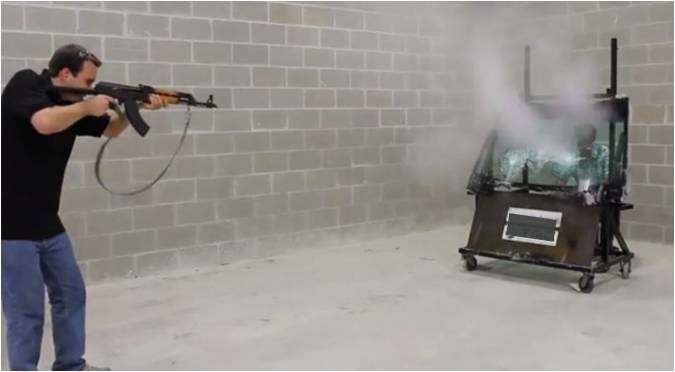
The UL 752 protection levels, under the current 11th edition, are as follows:
- Level 1 — Resists 3 shots from a 9mm handgun. Typical applications: retail counters, gas stations, pharmacies, residential windows.
- Level 2 — Resists 3 shots from a .357 Magnum. Typical applications: banks, credit unions, check cashing facilities.
- Level 3 — Resists 3 shots from a .44 Magnum. Typical applications: courthouses, schools, high-occupancy government buildings, law enforcement facilities.
- Level 4 — Resists 1 shot from a .30 caliber rifle. High-security commercial and government buildings.
- Level 5 — Resists 1 shot from a .308 rifle at high velocity. Commercial, government, and select military applications.
- Level 6 — Resists 5 shots from a 9mm at elevated velocity. High-security government and military facilities.
- Level 7 — Resists 5 shots from a 5.56mm rifle. High-risk government and military applications.
- Level 8 — Resists 5 shots from a 7.62mm military ball. Very high-risk government and military applications.
It is important to note that UL 752 levels are not fully linear — only levels 1 through 3 are hierarchical. A product tested to Level 3 automatically meets Levels 1 and 2, but a product tested to Level 8 does not automatically meet the requirements of Level 7, as each higher level is designed for a specific threat type rather than a simple incremental increase in protection.
EN 1063 and EN 1522 — The European Standards
EN 1063 classifies bullet-resistant glazing using a BR1–BR7 rating system for small arms threats, alongside SG1 and SG2 classes dedicated to shotgun blast. EN 1522 applies the same threat classification to complete window and door assemblies — frames, seals, hinges, and all — rather than glazing alone, ensuring that the entire installed system performs at the rated level. MILLENNIUM® products comply with EN 1522 for complete assemblies, providing system-level certification that covers every component of the installed window or door.
Additional Performance Features
MILLENNIUM® bullet resistant windows deliver more than ballistic protection. Our systems are engineered as complete high-performance window units, incorporating:
Thermal Insulation — Our bullet resistant frames use thermally broken aluminum construction, separating the interior and exterior aluminum profiles with an insulating polyamide barrier to minimize heat transfer. Combined with double or triple-pane insulating glass configurations, our windows meet modern energy efficiency requirements even in the most demanding security specifications.
UV Filtration — Bullet resistant laminated glazing inherently filters a substantial portion of ultraviolet radiation due to the PVB and polymer interlayers within the laminate stack. This protects interior furnishings, artwork, and finishes from UV degradation — a feature of particular value to museums, private art collectors, and high-end residential applications.
Sound Attenuation — The multi-layer laminate construction that provides ballistic resistance also delivers excellent acoustic performance, significantly reducing the transmission of exterior noise. This is a meaningful secondary benefit for installations near traffic corridors, airports, or in densely populated environments.
Anti-Reflective and Alarm Loop Options — Specialty glazing options include anti-reflective coatings to minimize surface glare and maintain clear sightlines, as well as integrated alarm loops that trigger a security alert if the glass is struck or breached.
Spall Containment — All UL 752-certified products must prevent hazardous spalling on the protected side. Even when a bullet impacts the glass, the laminate interlayers hold the assembly together, preventing dangerous glass fragments from flying into the protected space.
Compatible Frame and Opening Types
MILLENNIUM® bullet resistant glazing integrates with our full range of custom window and door configurations, including:
- Fixed/picture windows
- Tilt-and-turn windows
- Sliding windows and doors
- Casement windows
- Entrance doors and panic doors
- Transaction windows and pass-through openings
- Curtain wall and storefront systems
- Curved, oval, and non-standard geometric shapes
Our systems are compatible with aluminum, wood, and composite frames and can be retrofit into existing openings as well as specified for new construction. Whether you are securing a historic building with listed architecture or designing a modern commercial facility, our technical team will engineer a solution that fits structurally, aesthetically, and to your required ballistic rating.
Threat Assessment: Choosing the Right Level of Protection
Bullet-resistant glazing buys valuable time during the first seconds of a ballistic attack. Depending on the UL 752 level, it can stop several rounds from firearms commonly used in active threat scenarios, protecting occupants and giving them time to react, shelter in place, or evacuate while law enforcement responds.
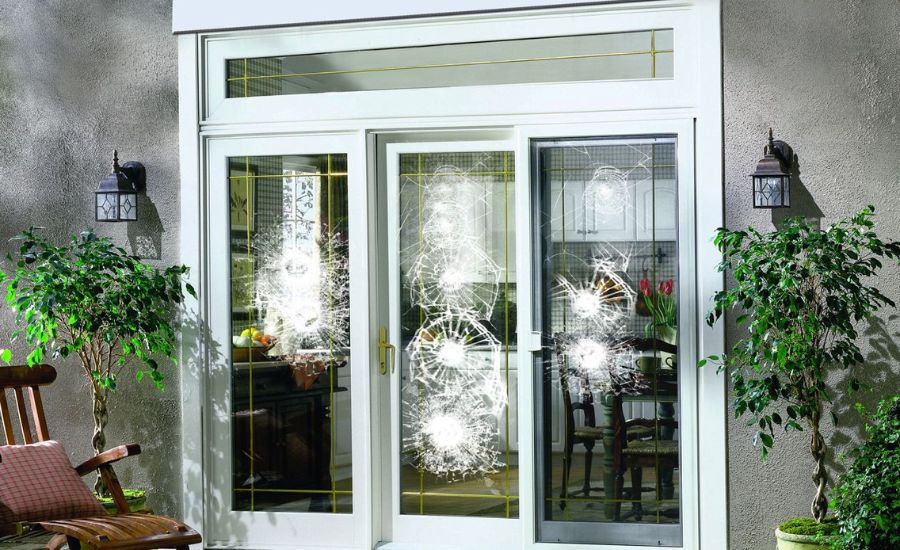
Selecting the appropriate protection level requires a realistic assessment of the threat environment. Over-specifying adds unnecessary cost and weight; under-specifying creates a false sense of security. MILLENNIUM®’s security consultants will work with you to evaluate your specific risk factors, site conditions, and budget to recommend the right product for your application.
Applications
MILLENNIUM® bullet resistant windows and doors have been installed in a wide range of high-security environments, including:
Embassies and consulates, banks and financial institutions, courthouses and government buildings, police stations and law enforcement facilities, schools and universities, post offices, museums and galleries, jewelry stores and luxury retail, military installations, private residences, and corporate headquarters.
A Note on Terminology
The original content on this page referred to this product as “bulletproof glass.” The correct and industry-standard term is bullet resistant glass. No glazing product provides absolute protection against every possible threat under every condition. What certified bullet resistant glazing does is provide tested, reliable protection against specific, defined threat levels — giving you confidence grounded in independent laboratory verification rather than marketing language.
Contact MILLENNIUM® Windows and Doors to discuss your project’s security requirements. Our technical team will guide you from threat assessment through specification, design, fabrication, and installation.
Phone: 918-582-5025