Architectural Freedom. Engineered Precision.
A custom window is not a product selected from a catalog — it is an architectural element designed for a specific building, a specific wall, a specific view. Its proportions respond to the room it serves. Its profile complements the architectural language of the facade. Its glazing specification is selected for the orientation, the climate, and the performance objectives of the project. Nothing about it is generic, because nothing about the building it belongs to is generic.
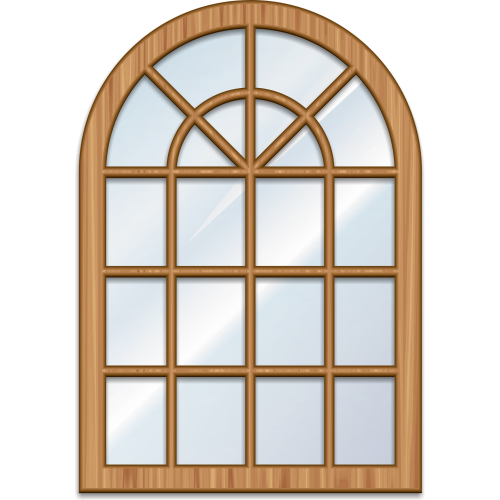
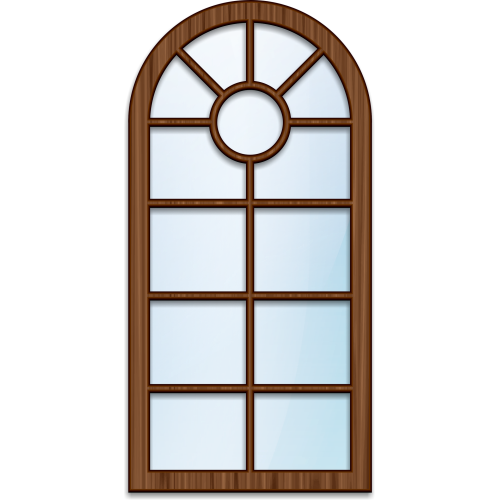

At MILLENNIUM® Windows and Doors, every window we manufacture is a custom window. We do not offer standard sizes from standard inventory. Every unit is fabricated to the exact dimensions, geometry, frame series, glazing specification, and hardware configuration required by the project — residential or commercial, new construction or renovation, contemporary or traditional, modest or ambitious.
The MILLENNIUM® Frame Series
Three frame systems cover the full range of architectural applications and performance requirements. Each is engineered to deliver precise thermal performance, structural integrity, and long-term durability in its respective material and application context.
A-Series — Thermally Broken Aluminum Aluminum is the material of precision, structural efficiency, and contemporary design. Its exceptional strength-to-weight ratio allows slimmer frame profiles than any other structural material — maximizing visible glass area within each opening while maintaining the rigidity required for large spans, multi-point locking loads, and wind resistance across exposed building facades.
Untreated aluminum is thermally conductive — a frame profile without thermal isolation would transfer heat between interior and exterior as efficiently as the frame material itself. Every A-Series profile incorporates a continuous polyamide thermal break, a non-conductive barrier that completely separates the interior and exterior aluminum sections and eliminates this thermal bridging pathway. The result is an aluminum frame that provides the structural performance of metal with thermal resistance appropriate for a high-performance building envelope.
A-Series windows are available in the full MILLENNIUM® powder coat color palette — any RAL color in matte, satin, or gloss finish — and are the standard specification for contemporary residential architecture, commercial glazing, large-format picture and panoramic windows, floor-to-ceiling wall glazing, and any application where slim profiles and maximum structural performance are the primary design objectives.
M-Series — Aluminum Exterior / Wood Interior The M-Series resolves the longstanding tension between exterior durability and interior warmth. The aluminum exterior cladding handles everything the outside environment delivers — UV radiation, precipitation, wind, thermal cycling, and mechanical impact — without maintenance, without deterioration, and without the paint or stain cycles that unprotected wood exterior surfaces require. The solid wood interior surface delivers the tactile warmth, natural variation, and design presence that no aluminum or composite interior can replicate.
The result is a window that presents the clean aluminum profile and contemporary precision of the A-Series to the exterior, and the warmth and craftsmanship of a wood window to the interior. This combination is particularly effective in projects where interior design centers on natural materials — exposed timber structure, hardwood floors, wood-paneled walls — and where the window interior surface is a meaningful design element in its own right.
W-Series — Solid Wood / Aluminum Exterior Cladding The W-Series is a solid wood window protected by aluminum exterior cladding. The wood frame provides natural thermal resistance — wood is a significantly better insulator than aluminum at equivalent profile depth — and a warmth of material character that is authentic rather than applied. The aluminum exterior cladding eliminates the maintenance demands of unprotected wood exteriors: no painting, no staining, no seasonal sealing.
The W-Series is the appropriate specification for traditional, craftsman, historic, and period architectural styles where authentic wood craftsmanship is integral to the design intent, and for any project where the thermal mass and natural insulating properties of solid wood are a deliberate performance strategy.
The MILLENNIUM® Glazing System
Every MILLENNIUM® window is glazed with a fully specified insulating glass unit — not a single component but an engineered assembly of multiple elements, each selected for a specific performance contribution.
Low-E Coating Low-E — low emissivity — metallic coatings are applied to one or more internal glass surfaces within the insulating glass unit. The coating is microscopically thin and optically transparent: looking through Low-E glass is visually indistinguishable from looking through clear uncoated glass. Its effect is thermal rather than visual. The coating reduces the emissivity of the coated glass surface from approximately 0.84 — the natural emissivity of uncoated glass — to as low as 0.02 to 0.04. At this emissivity level, the glass surface reflects long-wave infrared radiation rather than absorbing and re-emitting it, creating a radiant barrier that reduces heat transfer through the glass unit in both directions.
For winter performance, the Low-E coating on the room-side surface of the inner pane reflects radiant heat back into the interior rather than allowing it to escape through the glass. For summer performance in warm climates, a solar control Low-E coating on the outer pane reflects short-wave solar infrared away from the building before it enters the glass unit. The specific coating type — passive Low-E for heating-dominated climates, solar control Low-E for cooling-dominated or mixed climates — is selected based on the window’s orientation and the thermal objectives of the project.
Gas Fill The cavity between the two panes of an insulating glass unit is filled with argon gas as standard. Argon is approximately 34% denser than air and conducts heat at a meaningfully lower rate, reducing convective heat transfer within the cavity by approximately 10 to 15% compared to an air-filled unit of equivalent construction. Krypton gas — denser still and more effective — is available for narrow-cavity triple-pane units where its superior performance justifies the premium.
Warm Edge Spacer Bars The spacer bar that maintains the separation between the two glass panes and seals the cavity at the perimeter of the insulating glass unit is a critical and often overlooked thermal detail. Aluminum spacer bars — once universal — create a direct thermal bridge at the perimeter of each pane, conducting heat from the warm interior surface to the cold exterior surface and lowering the temperature of the glass near the edge. This edge cooling is a primary cause of perimeter condensation on otherwise well-specified windows.
MILLENNIUM® uses warm edge spacer bars — silicone foam, thermoplastic, or stainless steel with polymer inserts — which are up to 950 times less thermally conductive than aluminum. The warm edge spacer maintains a higher temperature at the glass perimeter, significantly reducing condensation risk and improving the overall U-factor of the unit.
Butyl Rubber Perimeter Seal The outermost seal of the insulating glass unit — between the spacer bar and the surrounding frame — is butyl rubber, which provides both the primary moisture barrier protecting the desiccant and gas fill within the cavity and the structural bond that holds the unit assembly together. Butyl rubber maintains its seal properties across the full temperature range experienced by an exterior window over its service life.
Double and Triple Pane Double-pane insulating glass with Low-E coating and argon fill is the MILLENNIUM® standard, achieving U-factors in the range of 0.25 to 0.35 W/m²K depending on the specific coating and cavity configuration. Triple-pane glazing — a third glass pane adding a second sealed cavity — is available as an upgrade, achieving U-factors below 0.20 and providing meaningful additional acoustic insulation. Triple-pane is particularly appropriate for north-facing glazing in cold climates, for acoustically sensitive applications adjacent to traffic or other noise sources, and for any project targeting Passive House or near-zero energy performance levels.
Laminated Safety Glass Laminated glass — two panes bonded with a polyvinyl butyral (PVB) or ionoplast interlayer — is specified as standard in all overhead glazing, all floor-level and near-grade glazing, and any application where code or safety considerations require it. When laminated glass fractures, the interlayer holds the fragments together — there is no fall of glass shards. This is a life-safety requirement for overhead applications and a forced-entry deterrent for ground-level applications.
Acoustic Configurations Standard double-pane insulating glass provides meaningful acoustic improvement over single glazing. For applications requiring higher acoustic performance — rooms adjacent to traffic, aircraft corridors, mechanical equipment, or other significant noise sources — acoustic glass configurations using asymmetric pane thicknesses (different thicknesses on each pane avoid the coincidence effect that compromises acoustic performance at specific frequencies), wider cavities, and laminated glass with acoustic interlayers can achieve substantial sound transmission reduction. MILLENNIUM® specifies acoustic glass configurations based on the ambient noise environment and the acoustic performance objectives of each project.
Window Types and Configurations
The MILLENNIUM® custom window program encompasses the full range of residential and commercial window types. Each is described in detail on its dedicated product page; this page provides an orientation to how they relate to one another within a complete building window design.
Fixed Windows and Picture Windows Fixed windows are the highest-performing and most thermally efficient window type — sealed, with no movable joints or operational clearances, achieving airtightness approaching zero infiltration. They are the appropriate specification for any opening where ventilation is not required, and the correct central element in large glazing compositions where view and light are the primary objectives. Fixed windows and picture windows are the most cost-effective component of any composite glazing wall.
Casement Windows Side-hinged, outward-opening windows that close with a four-sided compression seal — the tightest achievable closure in any operable window type. Casements are the preferred operable window where maximum airtightness and energy performance are the objectives in a ventilating window.
Tilt and Turn Windows The most functionally versatile operable window available. Three modes — closed and locked with full multi-point perimeter seal, top-tilt for secure draft-free ventilation, and full inward swing for egress and cleaning — operated by a single handle. The European engineering standard for high-performance operable windows, increasingly specified in American residential and commercial construction.
Awning and Hopper Windows Awning windows hinge at the top and open outward — they can remain open during rain. Hopper windows hinge at the bottom and open inward — they require no exterior clearance and are optimized for basement, utility, and high-wall ventilation applications. Both types achieve good airtightness through perimeter compression seals.
Double-Hung and Single-Hung Windows Traditional vertically operating windows in which the sash slides up and down within the frame. Double-hung windows allow both upper and lower sashes to move, enabling stack-effect ventilation and safer upper-floor operation. Single-hung windows have a fixed upper sash and a movable lower sash. Both types are the traditional window form for Colonial, Federal, Victorian, and craftsman architectural styles.
Sliding Windows Horizontally operating windows in which one or more sashes slide along tracks. Available in two-panel, three-panel, and four-panel configurations. The appropriate specification for wide, shallow openings where vertical sash travel is constrained.
Transom Windows Fixed or operable windows positioned above a door or primary window. Available in rectangular, fanlight, elliptical, Gothic arch, and custom geometric profiles. Transoms extend the glazed area of an opening vertically, admit light at ceiling level, and contribute significantly to the architectural character of an entry or interior composition.
Specialty Shapes Fixed windows in circular, semicircular, elliptical, triangular, trapezoidal, arched, and fully custom geometric forms. Specialty shapes are fabricated to complement the profile of adjacent standard rectangular units and to address specific architectural conditions — gable ends, stairwells, accent elements, and decorative compositions — where a rectangular window would be inappropriate or architecturally insufficient.
Bay and Bow Windows Projecting window assemblies that extend beyond the building’s wall plane, creating interior projection space and a wider external view arc than any flush window of equivalent width. Bay windows use angled side panels at 30°, 45°, or 90° to the wall; bow windows use a series of four to six panels at shallow angles to create a curved projection. Both types introduce natural light from multiple directions simultaneously and create distinctive interior spaces — window seats, breakfast nooks, reading alcoves.
Skylights and Roof Windows Glazed openings in the roof or ceiling plane rather than the wall, admitting light from above and — in operable configurations — providing stack-effect ventilation at the highest point in the building. Roof windows are installed flush within the pitched roof plane for habitable attic rooms; skylights are typically mounted on upstands above flat or low-pitched roofs.
Storm Windows Primary windows engineered and tested to specific wind resistance, water tightness, and air permeability performance classes for installation in severe weather environments. Wind resistance classes from B-3 through C-5 for residential and commercial applications in tornado-prone, coastal, and high-altitude exposure conditions.
Design and Engineering Process
Every MILLENNIUM® custom window project follows a consistent process from initial inquiry to completed installation.
Consultation and Design The process begins with a conversation about the project — its architectural character, its performance objectives, its site conditions, and its budget. Our team reviews existing drawings or site conditions, identifies the window types appropriate for each opening, and develops preliminary specifications for frame series, glazing configuration, and hardware.
Specification and Quotation Based on the design consultation, a complete window specification is prepared for each unit in the project — frame series, dimensions, glazing specification, hardware, finish, and any special requirements. This specification is the basis for a detailed project quotation.
Fabrication Every window is custom fabricated to the exact specifications of the project. Frame profiles are cut, assembled, and thermally broken at the appropriate joints. Insulating glass units are assembled with the specified coating, gas fill, and spacer bar configuration. Hardware is installed and adjusted. Units are inspected before shipment.
Installation MILLENNIUM® performs complete installation of all window projects. Installation includes preparation of rough openings, setting and leveling of frames, perimeter flashing and air barrier integration, interior and exterior trim, and final hardware adjustment and testing. We do not supply windows for self-installation or third-party installation — the performance of the complete installation cannot be guaranteed when it is performed outside our direct supervision.
Every project begins with a conversation. Contact MILLENNIUM® Windows and Doors to discuss your custom window requirements — residential or commercial, new construction or renovation, single window or complete building envelope.
Phone: 918-582-5025
MILLENNIUM® Windows and Doors — Tulsa, Oklahoma