What Is a Bay Window?
A bay window is made of three panels that project outward from the wall, usually at sharp angles of 30 to 45 degrees. The center panel is often larger and fixed, while the two side panels can be smaller and operable, like casement windows or double-hung windows. This angular outward projection creates a distinct structural bump-out from the wall, forming a defined alcove on the interior that adds usable floor space, expands views, and draws natural light into the room from multiple directions simultaneously.
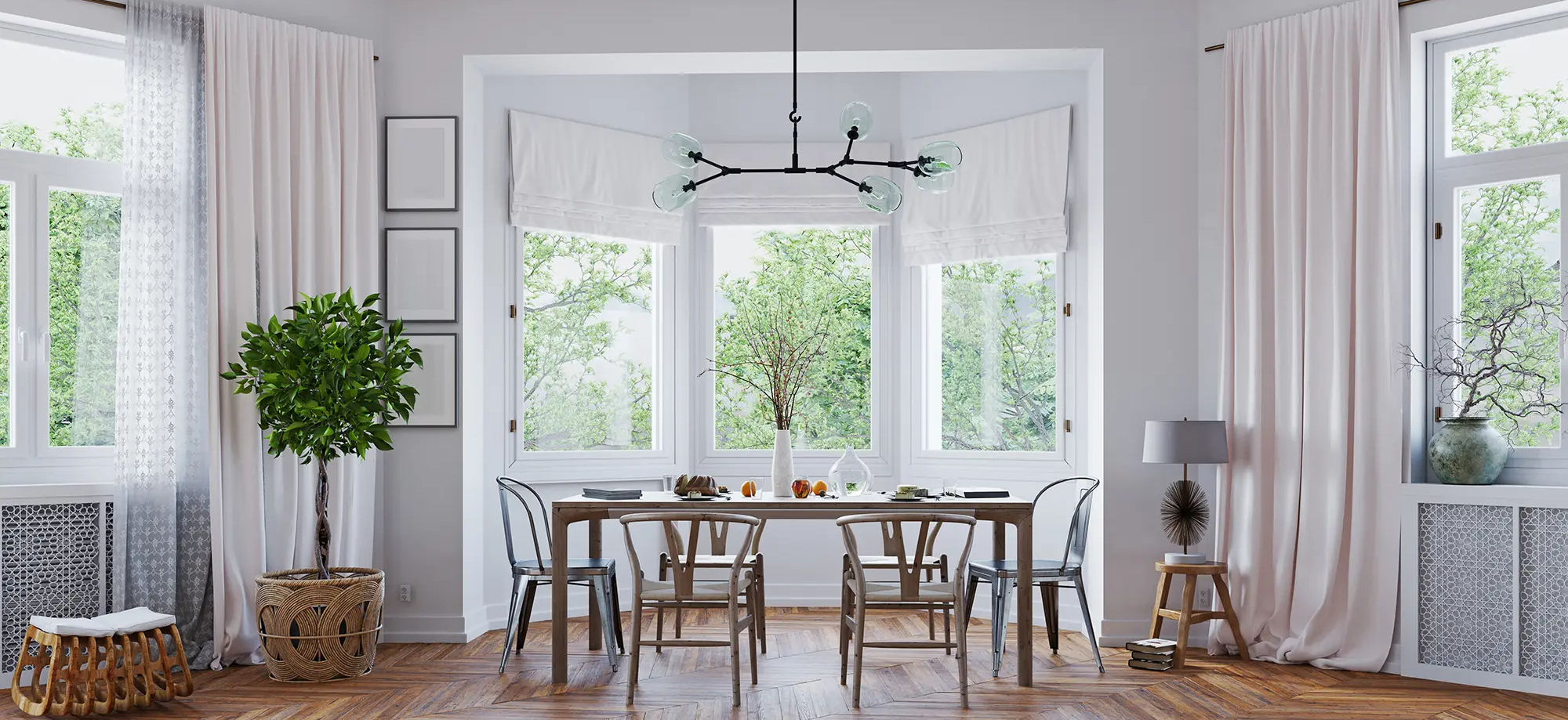
Bay windows are a classic architectural feature that projects outward from the main walls of a building, forming a bay inside the room. They are among the most architecturally significant window products available — not simply a glazing choice but a structural addition that transforms both the interior volume of a room and the exterior character of a facade.
Bay Windows vs. Bow Windows: Understanding the Difference
Bay windows and bow windows are frequently confused, and the terms are often used interchangeably in casual conversation. They are distinct products with meaningfully different aesthetics, structural requirements, and costs. Understanding the difference is essential before specifying either.
Bay windows have three panels joined at sharp angles, usually 30 to 45 degrees, creating a bold, angular projection. Bow windows use four to six panels set in a gentle curve, forming a smooth arc.
Bay windows are more pronounced, with angular dimensions, making a distinct visual statement both inside and out. The other key difference is that bay windows expand out farther from the house than bows. Bow windows are typically set at 15 degrees or less per panel, whereas bay windows are commonly set at 45 or even 90 degrees.
Bay windows are generally more affordable, given their simpler design and fewer panels. Bow windows, with their additional panes and custom build options, often come at a higher price point. However, they can add significant value to a property due to their expansive light and luxurious aesthetic.
From an architectural standpoint: bay windows bring a modern, bold look with clean angles — popular in transitional and contemporary homes — while bow windows deliver timeless elegance often linked to Victorian or classic architecture, but they can also soften the lines of modern houses.
MILLENNIUM® custom designs and fabricates both bay and bow window assemblies. This page covers bay windows specifically; contact us if you are considering a bow window configuration.
Bay Window Configuration Options
Standard 3-Panel Bay (30° or 45°) A classic bay window requires a combination of three windows that angle either 30 or 45 degrees beyond the exterior wall. The center window is generally a picture window with either a casement, single, or double-hung window on each side. The angle of the side panels is one of the first and most important decisions: a 30° angle creates a shallower, more subtle projection that suits narrower wall openings and adds floor space without dramatically altering the room’s geometry. A 45° angle projects further, creates a deeper alcove, and makes a stronger visual statement both inside and out.
Box Bay (90°) Box bay windows, also sometimes called square bay windows, are typically rectangular bump-outs set at 90-degree angles to each other and to the wall. The flat front panel runs parallel to the wall while the two side panels return directly into the wall at right angles, creating a clean, boxy projection. Box bays are common in craftsman, colonial, and traditional residential architecture and are particularly effective as kitchen window seats and breakfast nook bump-outs.
Operable Panel Configurations The center panel of a bay window is almost always fixed, providing the primary view and maximum glass area. The flanking panels can be specified as casement windows, double-hung windows, or single-hung windows depending on the ventilation requirements and preferences of the application. If you want more ventilation, bay windows that open are an essential consideration. You can choose between double-hung or casement configurations, as well as whether you want the center unit stationary or operable. Casement side panels open to a full 90°, providing the maximum ventilation of any operable option and allowing easy exterior cleaning from inside.
Benefits of Bay Windows
Natural Light from Multiple Angles Because the three panels face in three different directions simultaneously, a bay window captures light across a wider arc of the sky than any flat window can. The angled design allows sunlight to enter from multiple directions, brightening the room and creating a warm, inviting atmosphere. This is particularly valuable on north- or east-facing walls that receive limited direct sun, and in rooms where a single flat window would leave dark corners.
Additional Interior Space and Functional Alcoves Bay windows create extra interior space for seating or storage. The pronounced angles create defined corners perfect for built-in seating or storage. The deep projection of a 45° or 90° bay creates enough interior floor area to accommodate a built-in window seat with storage beneath, a reading bench, a breakfast nook, a home office desk alcove, or a dedicated space for plants and indoor gardening. This functional interior alcove is one of the defining advantages of a bay window over any other window type.
Enhanced Views The protruding structure of a bay window provides expanded peripheral views — looking out the side panels allows you to see down the street, across the yard, or into the garden in ways a flat window cannot. For a room overlooking a garden, a waterfront, or a landscape, the expanded viewing angle of a bay window meaningfully enhances the connection between the interior and the exterior.
Curb Appeal and Property Value Bay windows are among the most architecturally expressive features available in residential window products. Bay windows add architectural interest and curb appeal, potentially increasing the resale value of the home. A well-proportioned bay window on a street-facing facade is often the single most memorable exterior detail of a house. The interior alcove it creates frequently becomes the most prized spot in the room.
Sense of Space Smaller rooms can have the illusion of more space simply by adding bay windows. The bay window panes make the room look and feel larger. The combination of expanded floor area, wider views, and increased light from multiple angles creates a genuine spatial transformation in even modestly sized rooms.
Structural and Installation Considerations
Bay windows are more structurally involved than flat window replacements. Because the assembly projects outward from the wall, it must be properly supported — either from below via a knee wall, corbels, or cables, or from above via the structural header. Installation can be complex and requires structural support. The roof structure over the projection must also be carefully designed and flashed to ensure long-term weather resistance, as the horizontal surface of the bay roof is a potential water infiltration point if not properly detailed.
The size of the wall opening is also a practical constraint. As a rule, bay windows fit best into wall spaces 40 inches or larger. Below this width, the projection geometry becomes too shallow to provide meaningful interior space or visual impact.
For retrofit installations in existing homes, a structural engineer’s review may be required to confirm that the existing wall framing can support the header span needed for the opening. MILLENNIUM® coordinates with contractors and structural engineers as needed throughout the design and installation process.
Energy Performance of Bay Windows
Bay windows require particular attention to energy detailing because their projecting structure is exposed to the elements on three glazed sides plus a bottom (the seat board) and a top (the roof section) — giving heat or cold multiple pathways to enter or exit. A poorly detailed bay window installation can become a significant energy liability; a well-specified and correctly installed one performs as well as any flat window installation.
The key energy performance elements in a bay window assembly are the same as for any MILLENNIUM® product: double-pane insulating glass units with Low-E coating and argon gas fill for the glazing, thermally broken aluminum or wood frame construction to minimize conduction through the frame, warm edge spacer bars to eliminate edge-of-glass thermal bridging, and comprehensive perimeter air sealing during installation. The seat board — the horizontal surface at the base of the bay — should be fully insulated and air-sealed, as this is often the most thermally vulnerable element of the assembly. With modern double- or triple-pane Low-E glass, bay windows can achieve strong energy performance if installed by professionals.
Interior Design Possibilities
The alcove created by a bay window is one of the most versatile interior spaces in a home. Common and effective uses include:
A window seat — a built-in bench spanning the full width of the alcove at sill height, with storage drawers or a hinged seat for access to the space below. Upholstered with cushions and flanked by bookshelves, a window seat alcove becomes one of the most comfortable and sought-after spots in any room.
A breakfast nook — a bay window in a kitchen or dining area fitted with a built-in table and bench seating on three sides, creating an intimate eating area with views. The bay’s light from multiple angles makes this arrangement particularly pleasant at all times of day.
A home office alcove — a desk positioned within the bay, facing outward, surrounded on three sides by views and natural light. The defined geometry of the alcove provides a sense of enclosure and focus without the claustrophobia of a fully enclosed office.
A plant and garden display — the multi-directional light of a bay window makes the alcove an exceptionally effective growing environment for houseplants, herbs, and indoor gardens.
MILLENNIUM® Frame and Glazing Specifications
MILLENNIUM® bay windows are custom designed and fabricated in all three frame series:
A-Series — Thermally broken aluminum. Maximum structural rigidity and dimensional stability. Ideal for contemporary and modern architectural styles.
M-Series — Aluminum exterior with wood interior. Weather-resistant exterior combined with the warmth and beauty of natural wood inside.
W-Series — Solid wood with aluminum exterior cladding. The most naturally insulating frame material, with full exterior weather protection from the aluminum cladding.
Standard glazing specification includes double-pane Low-E insulating glass with argon fill, warm edge spacer bars, and butyl rubber perimeter seals. Tempered glass is specified for all glazing within 18 inches of the floor or in other code-required locations. Full customization of glass type, grille pattern, hardware finish, and interior and exterior color or woodgrain finish is available.
Contact MILLENNIUM® Windows and Doors for a free consultation and appraisal. We will work with you through every stage — from structural planning and opening dimensions to frame series selection, glazing specification, and professional installation.
Phone: 918-582-5025