The Enduring Appeal of the Arched Window
Arched windows, also known as curved windows, are characterized by their rounded tops, which add an elegant and dramatic design element to a home. While they all have arches, they come in a surprising variety of shapes, from simple half-circle transom windows to pointed arches and partial arches. The arch lifts the eye upward, helping spaces feel taller, brighter, and more open.
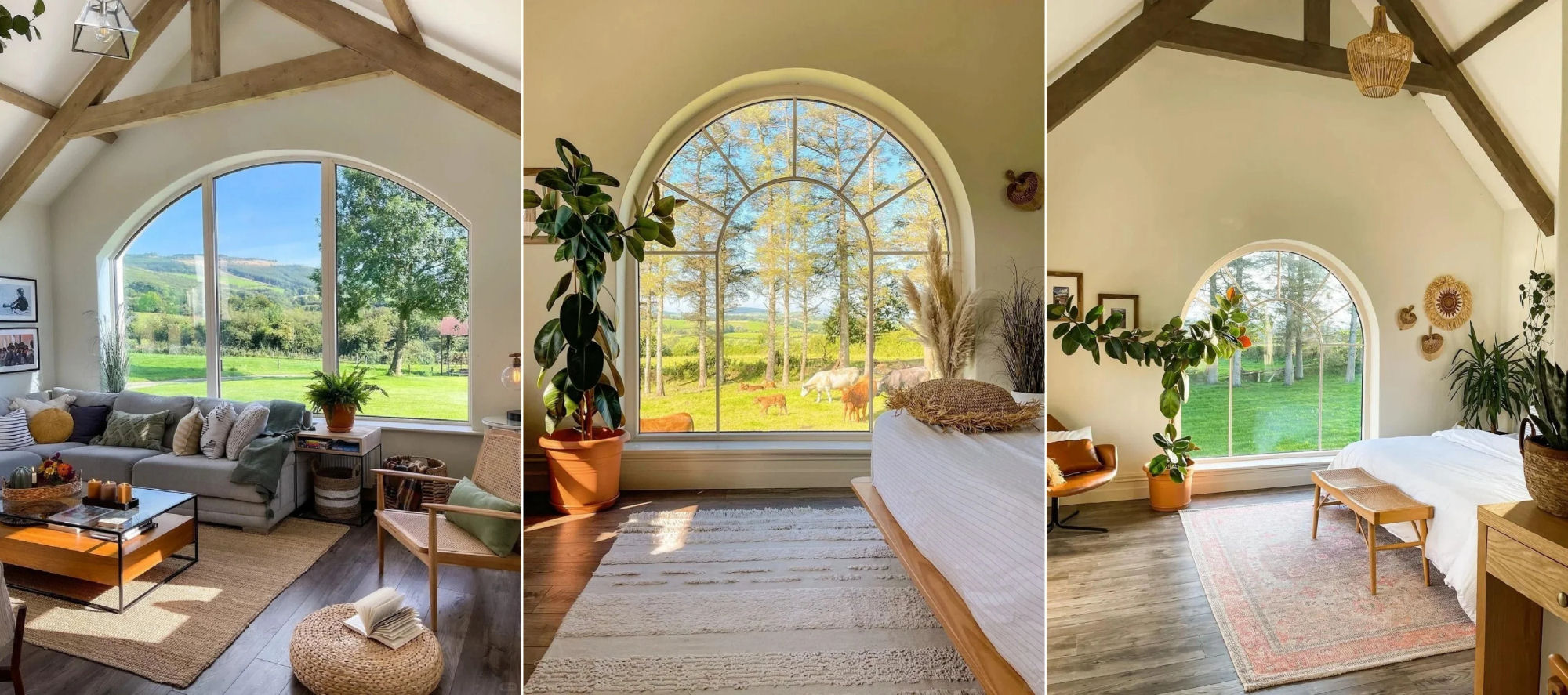
Arched windows have a rich and enduring history in architecture, dating back millennia. One of the earliest examples can be found in the Roman architectural tradition, where semi-circular arches were incorporated into monumental structures as both a functional and symbolically significant element representing strength and stability. Department of Energy During the Gothic period, which spanned from the 12th to the 16th century, pointed arches became a hallmark feature of cathedrals and churches. These arched windows, with their intricate tracery and stained glass, were used to create awe-inspiring, light-filled spaces that served both functional and spiritual purposes. Department of Energy In subsequent centuries, arched windows continued to be embraced by the Renaissance and Baroque styles, before making a significant resurgence during the Neoclassical revival of the 18th and 19th centuries, when architects drew inspiration from ancient Roman and Greek architecture to convey classical elegance and symmetry. Department of Energy
Today, arched windows are not relics of the past — they remain one of the most versatile and architecturally expressive window forms available, as natural in a new contemporary home as in a historic restoration.
Types of Arched Windows
The original page described an arched window simply as one whose “upper part is rounded, forming an arc of a circle.” In practice, the arch profile is one of the most important design decisions in the entire specification, because it determines the window’s architectural character and its compatibility with your home’s style. MILLENNIUM® custom fabricates all of the following arch types:
Semicircular (Round) Arch The semicircular arch features a half-circle shape and is often associated with Roman and Renaissance architecture, evoking a sense of grandeur and timelessness. BKV Energy It is perfectly symmetrical, works well as a standalone statement window or as a transom above a door, and suits Italianate, Mediterranean, Colonial, and classical revival styles. A mirrored semicircular arch produces a perfect circle — another popular specialty shape.
Segmental (Shallow) Arch A shallow arch is recognizable as having a relatively wide span with a gentle, flattened curvature. Unlike a true arch, which is perfectly semicircular, a shallow arch has a less pronounced curve. Department of Energy Shallow arches are among the most versatile in practice — they add architectural interest without dominating the facade, integrate naturally alongside rectangular windows, and suit a wide range of residential styles from craftsman to transitional to modern farmhouse.
Elliptical Arch A softer, elongated curve defines the elliptical arch. This type is versatile and complements a range of architectural styles, from traditional to contemporary. BKV Energy Elliptical arches are frequently used in Federal and Adam-style architecture, often as elegant fanlights above entry doors with radiating muntins.
Gothic (Pointed) Arch Characterized by a pointed apex, the Gothic arch is a hallmark of Gothic architecture and imparts a sense of verticality. BKV Energy It is commonly associated with Victorian, Tudor, and ecclesiastical buildings, but pointed arches in a clean, minimal profile can also read as distinctly contemporary in the right context.
Eyebrow Arch An eyebrow arch has a straight line across the bottom and a curved top with sharp corners where the two lines intersect — similar to the elliptical but lower and wider in profile. Eyebrow windows placed above a standard rectangular window are a classic detail in craftsman and shingle-style architecture, adding light and character without a large opening.
Cathedral / Springline Arch Cathedral windows feature a sharp, tall arch with a towering shape that allows ample natural light while drawing attention to the vertical space, making them ideal for great rooms or entryways. These are among the most dramatic arch profiles available and work best in rooms with high ceilings where the full vertical proportion of the arch can be appreciated.
Palladian Composition A Palladian window features a central arched window flanked by two rectangular windows. This classical tripartite composition, rooted in Renaissance architectural theory, remains one of the most recognizable and refined window arrangements in residential architecture, particularly in Federal, Georgian, and Colonial Revival styles.
Quarter Circle and Custom Profiles Quarter-circle windows — one right angle with a connecting curve — are often used in pairs to create a composite arch above a door or as accent windows in gable ends. MILLENNIUM® also fabricates fully custom arch profiles to match existing windows in a historic renovation or to realize an architect’s original design intent.
Where Arched Windows Work Best
Arched and curved windows aren’t tied to a specific architectural style. Thanks to their elegant look and ability to increase light and ventilation, many styles have incorporated arched windows over the years. That said, certain applications are particularly well suited to arched glazing:
Entry doors and sidelights — A semicircular or elliptical fanlight above an entry door is one of the most classic applications in American residential architecture, instantly elevating the character of any facade. Paired with sidelights, it creates the signature Federal and Greek Revival entry composition.
Stair landings and hallways — In a stepped pattern up the stairs, a series of arched windows can open a space to light and views — a classic application from Spanish Colonial Revival architecture. A single arched window at a landing is also an effective way to flood an otherwise dark transitional space with natural light.
Great rooms and foyers with high ceilings — Cathedral and full-height arch profiles are ideally suited to spaces where the vertical dimension of the room can fully accommodate them. Installing a tall arched window in a room with standard 8-foot ceilings rarely works as intended; in a room with 12- or 16-foot ceilings, the same window can be transformative.
Gable ends — The triangular geometry of a gable end is a natural location for an arched or circular window, which fills the space with light while complementing the roofline geometry.
Above existing rectangular windows — Adding a transom arch above a standard double hung or casement window increases the glazed area, brings in additional light at ceiling level, and adds architectural interest to an otherwise standard opening.
Fixed vs. Operable Arched Windows
Fixed arched windows don’t open — their main purpose is to bring in natural light and add architectural style. They’re great for hallways, high walls, staircases, and any spot where you want a beautiful feature window without needing ventilation.
While arched windows are often fixed, some designs incorporate operable sections that allow for ventilation. The addition of transom windows or strategically placed vents within the arched design ensures that fresh air can circulate, contributing to a well-ventilated and comfortable living space. BKV Energy
In practice, the most common approach for a tall arched opening is a hybrid: a fixed arched upper section (the “head”) paired with an operable lower section — a casement, double hung, or fixed rectangular unit — below. This preserves the full visual impact of the arch while providing ventilation through the lower operable sash. MILLENNIUM® designs and fabricates these combined units as integrated assemblies with matching frame profiles, ensuring a cohesive appearance inside and out.
Arched Doors
Arched glass doors follow the same arch profiles as windows and are available in all of MILLENNIUM®’s door configurations — entry doors, sliding doors, and interior glass doors. An arched entry door is one of the most powerful single design moves available in residential architecture, creating an immediate sense of arrival and scale. For matching continuity, arched doors can be specified with matching flanking sidelights and a complementary transom above, all fabricated to the same arch geometry and frame profile.
Custom Fabrication: Why Arched Units Require Expert Manufacturing
Installing arched windows as a replacement project can be challenging, especially if it involves altering the structure of the walls. The effort and cost involved in retrofitting arched windows into an existing structure will typically be higher than for standard window replacements. This is because no two arched openings are exactly alike, curved frame profiles cannot be extruded in straight lengths and bent afterward without precision tooling, and the insulating glass unit itself must be fabricated to the exact arch geometry — a process that requires different equipment and expertise than cutting a rectangular IGU.
MILLENNIUM® custom fabricates every arched window and door unit to the exact dimensions and arch geometry of your opening. Whether you are working from architectural drawings on a new construction project, matching existing windows in a historic restoration, or replacing a failed arched unit in an existing home, our technical team will document the precise geometry required and fabricate a replacement that fits correctly and performs to specification.
Glass and Frame Specifications
All MILLENNIUM® arched windows and doors are available with the full range of glazing and frame options:
Frame Series — A-Series (thermally broken aluminum), M-Series (aluminum exterior / wood interior), and W-Series (solid wood / aluminum exterior cladding). All three series can be fabricated to curved profiles.
Double Pane Low-E Insulating Glass — Standard in all units. Two panes of glass sealed around a warm edge spacer bar with an argon gas cavity. Low-E coating reduces emissivity to as low as 0.02–0.04, reflecting long-wave infrared heat back into the room in winter while blocking solar heat gain in summer. Visible light transmittance remains high, maintaining the abundant natural light that is the primary reason most homeowners choose arched windows.
UV Protection — Low-E coatings and laminated glass options filter a significant portion of ultraviolet radiation, protecting interior furnishings, artwork, flooring, and finishes from solar fading — particularly relevant for south- and west-facing arched windows that receive extended direct sun exposure.
Decorative Glass Options — Arched windows are available with a wide range of decorative glass treatments, including leaded glass, beveled glass, art glass, and custom grille patterns. These options are particularly appropriate for historic restorations, ecclesiastical applications, and high-end residential projects where the window is a design centerpiece rather than simply a functional opening.
Tempered and Laminated Glass — Required by code in many arched applications depending on the height of the sill above the floor. MILLENNIUM® will advise on applicable code requirements for your jurisdiction and ensure that all glazing specifications are compliant.
Every MILLENNIUM® arched window and door is custom made to your exact specifications. Contact us to discuss your project, review arch profile options, and receive a free consultation and appraisal.
Phone: 918-582-5025