What Is a Bow Window?
A bow window is a multi-panel projecting window assembly in which four, five, or six individual window units are joined together in a gentle, continuous outward curve. Unlike a bay window — which uses three panels set at sharp 30°, 45°, or 90° angles to create a clearly angular bump-out — a bow window distributes the projection across multiple shallower angles, typically 10° to 15° per panel, producing a smooth, rounded arc that projects gracefully from the exterior wall.
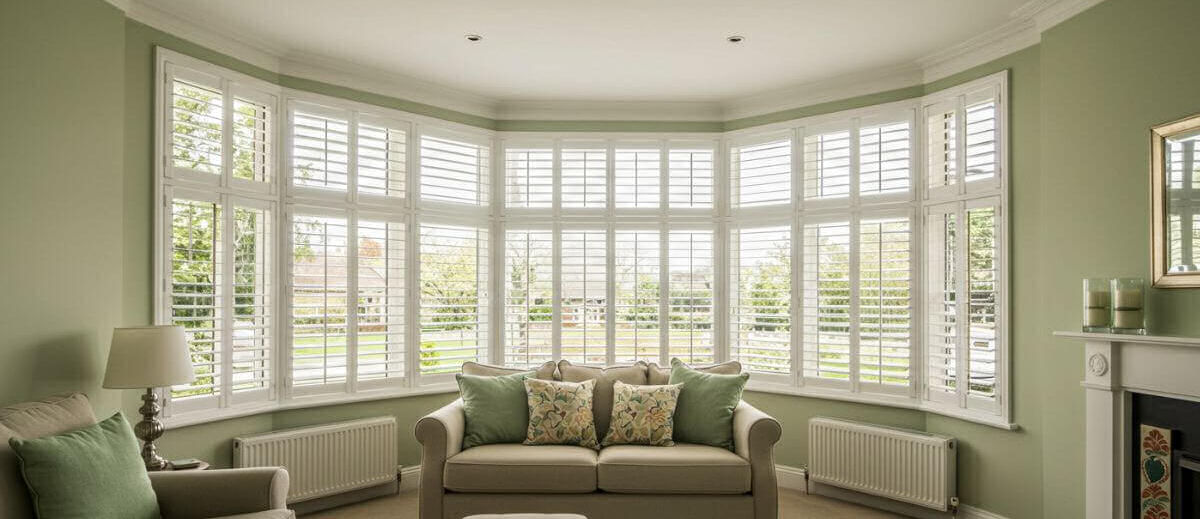
The result on the interior is a wide, curved alcove that adds usable floor space and creates a sweeping panoramic view. On the exterior, the soft curve of a bow window produces one of the most elegant and architecturally refined profiles available in any residential window product.
How Bow Windows Differ from Bay Windows
These two window types are closely related — both project outward from the wall, both create an interior alcove, and both capture light from multiple directions simultaneously. But their geometry, proportions, aesthetics, and structural requirements differ in ways that matter when choosing between them.
Profile and curvature — A bay window uses three panels at sharp angles, creating an angular, clearly faceted projection. A bow window uses four to six panels at shallow angles, producing a rounded, curved profile. The difference is immediately visible from both inside and outside the house.
Panel count and width — Because the curve of a bow window is distributed across more panels, bow windows are typically wider than bay windows, making them better suited to larger wall openings. A standard bow window runs anywhere from five to twelve feet wide; bay windows work well in openings as narrow as three to four feet.
Interior alcove shape — The angular geometry of a bay window creates a well-defined alcove with distinct corners — ideal for built-in bench seating, storage, or a breakfast nook. The curved sweep of a bow window creates a shallower, more open alcove that flows naturally into the room rather than defining a separate pocket of space.
Depth of projection — Bay windows project further from the wall because their side panels meet the wall at steeper angles. Bow windows project more shallowly due to their gentler angles, trading depth for panoramic width.
Light — Both types capture light from multiple directions, but the wider span of a bow window, combined with its greater number of panels, generally delivers more total glass area and a broader arc of incoming light than a bay window of equivalent wall opening width.
Architectural character — Bay windows read as bold and angular, working naturally in craftsman, colonial, transitional, and contemporary styles. Bow windows read as graceful and curved, an especially natural fit for Victorian, Edwardian, Georgian, Tudor Revival, and traditional architectural styles — though a clean, minimal bow window in a contemporary profile suits modern architecture equally well.
Structural complexity — Bow windows involve more panels and a wider span, requiring a longer and stronger structural header above the opening. The installation is more involved and typically more expensive than a comparable bay window.
Panel Configurations
4-Panel Bow The most compact bow window option. Four panels set at approximately 15° from one another produce a modest arc suitable for smaller wall openings. All four panels can be fixed, or the two center panels can be specified as operable casements or double-hung units while the outer panels remain fixed.
5-Panel Bow The most common bow window configuration in residential construction. Five panels produce a more pronounced curve and greater interior alcove depth than a 4-panel assembly. The typical configuration uses a fixed center panel flanked by two operable units on each side, though fully fixed assemblies are also available where ventilation is not a priority.
6-Panel Bow Six panels produce the fullest, most pronounced curve available in a bow window. Best suited to wider wall openings — typically eight feet or more — where the full arc can be properly proportioned. A 6-panel bow window creates the most expansive panoramic view and the most generous interior alcove of any standard bow configuration.
All-Fixed vs. Partially Operable Fixed bow window assemblies maximize glass area and provide the strongest thermal performance, as each panel is a sealed insulating glass unit with no operating mechanism and no movable weatherstrip joints. Partially operable configurations — typically using casement units for the flanking panels — provide ventilation flexibility. Casement side panels are the preferred operable choice because they open outward on a hinge, providing a full panel’s worth of ventilation without requiring the sash to slide within the frame.
Benefits of Bow Windows
Panoramic Views The wide, curved span of a bow window creates a viewing arc that no flat window can match. Rather than a single rectangular view forward, a bow window delivers a continuous sweep of the outdoor environment — expansive and immersive in a way that changes how a room relates to its surroundings. This quality is particularly valuable for rooms overlooking gardens, water, natural landscapes, or streetscapes where the view itself is a primary asset.
Maximum Natural Light The bow’s multiple panels facing in slightly different directions simultaneously capture light across a broader portion of the sky than any flat window of equivalent width. Early morning light, midday sun, and afternoon light all enter through different panels, keeping the room bright across a longer portion of the day. In rooms on less-favored orientations — north or northeast-facing walls, for example — a bow window’s ability to gather light from a wider angle is particularly beneficial.
Expanded Interior Space Like a bay window, a bow creates a genuine increase in interior floor area at the projection. While the bow’s shallower angles mean the alcove is not as deep as a bay’s, the greater width of the bow assembly compensates, and the curved geometry creates a distinctly different spatial experience — open and flowing rather than enclosed and defined. Depending on the depth of the projection, a bow window alcove can accommodate a curved window seat, a plant shelf, a desk arrangement, or simply serve as a generous sense of additional room volume.
Architectural Distinction A bow window is one of the most visually impactful features available in residential architecture. The graceful outward curve commands attention on a facade and creates a feature that is immediately recognizable and widely admired. Properly proportioned to the wall and the room behind it, a bow window elevates the perceived quality of an entire house — both from the street and from within.
Interior Uses of the Bow Window Alcove
The curved alcove created by a bow window is one of the most versatile and appealing interior spaces in a home. Common applications include:
A curved window seat — upholstered cushions following the full width of the projection at sill height, with hinged or drawer storage beneath. The curved form of the seat follows the bow’s geometry for a polished, custom-built appearance.
A plant and garden display — the multi-directional, high-quality light of a bow window makes it one of the best environments in a home for houseplants, herbs, and indoor gardens. The wide shallow shelf of the sill accommodates multiple planters across its full span.
A reading or sitting area — the sense of enclosure created by being surrounded on three sides by glass, while remaining open to the room behind, makes a bow window alcove a naturally comfortable and light-filled place to sit.
A dining nook or breakfast area — in a kitchen or dining room, a bow window creates a naturally bright, panoramic setting for a table and chairs, with the curved window providing a backdrop that no flat wall can replicate.
Frame Series
MILLENNIUM® bow windows are custom designed and fabricated in all three frame series. Every bow window assembly is made to order based on the exact dimensions and configuration of your opening.
A-Series — Thermally Broken Aluminum An all-aluminum frame with an insulating polyamide thermal break dividing the interior and exterior aluminum profiles, eliminating the thermal bridging inherent in untreated aluminum. The dimensional stability of aluminum is particularly valuable in multi-panel bow assemblies, where frame consistency across all panels is critical to maintaining uniform reveal lines and joint integrity. Ideal for contemporary and modern architecture.
M-Series — Aluminum Exterior / Wood Interior Aluminum exterior cladding provides full weather protection and requires no maintenance, while a natural wood interior surface delivers warmth and visual richness. An excellent choice for homeowners who want natural wood aesthetics inside without the exterior maintenance demands of an all-wood window.
W-Series — Solid Wood / Aluminum Exterior Cladding A genuine solid wood frame — the most naturally insulating common frame material and the best environmental life-cycle performer — with aluminum exterior cladding protecting the wood from moisture, UV, and temperature cycling. The traditional choice for Victorian, craftsman, and period residential architecture where authentic wood craftsmanship is the priority.
Glass and Finish Specifications
All MILLENNIUM® bow windows include double-pane Low-E insulating glass as standard, with argon gas fill, warm edge spacer bars, and butyl rubber perimeter seals. Low-E coatings reduce the glass surface emissivity to as low as 0.02–0.04, dramatically limiting heat transfer through the glazing in both winter and summer while maintaining high visible light transmittance. Tempered glass is specified wherever required by code — typically within 18 inches of the finished floor.
Optional glazing upgrades include triple-pane glass for maximum thermal and acoustic performance, laminated glass for enhanced safety and UV filtration, decorative leaded or beveled glass panels for period-appropriate applications, and ballistic-resistant glazing for security-sensitive installations.
Interior and exterior finishes are fully customizable. Frame exteriors are available in the full MILLENNIUM® color palette from white and cream through grays, bronzes, and blacks, as well as woodgrain foil finishes. Interior frame surfaces in the W-Series and M-Series can be stained or painted to any interior specification.
Structural and Installation Notes
Bow windows involve a wider header span and more panels than bay windows, and their installation requires careful structural coordination. The wall opening must be properly sized and headed, the assembly must be correctly supported from below or above depending on the sill height and wall construction, and the roof structure over the projection — whether a flat shed roof, a hipped mini-roof, or a curved soffit — must be correctly flashed and sealed against water infiltration.
MILLENNIUM® manages the complete installation process, from structural coordination through finish detailing. Our technicians are experienced with both new construction rough-opening specifications and retrofit installations in existing homes, including historic properties where matching existing profiles and details is a priority.
Contact MILLENNIUM® Windows and Doors for a free consultation and appraisal. We will guide you through every decision — panel count, angle, frame series, glazing specification, interior finish, and exterior color — to ensure your bow window is exactly right for your home and your project.
Phone: 918-582-5025