What Is a Transom Window?
A transom window is a window positioned directly above a door or another window, separated from the opening below by a horizontal structural bar called the transom — from the Latin transtrum, meaning crossbeam. The transom bar carries the load of the wall above across the width of the opening and supports the transom window within the same overall frame composition. The result is a stacked assembly: door or window below, transom window above, unified within a single architectural opening.
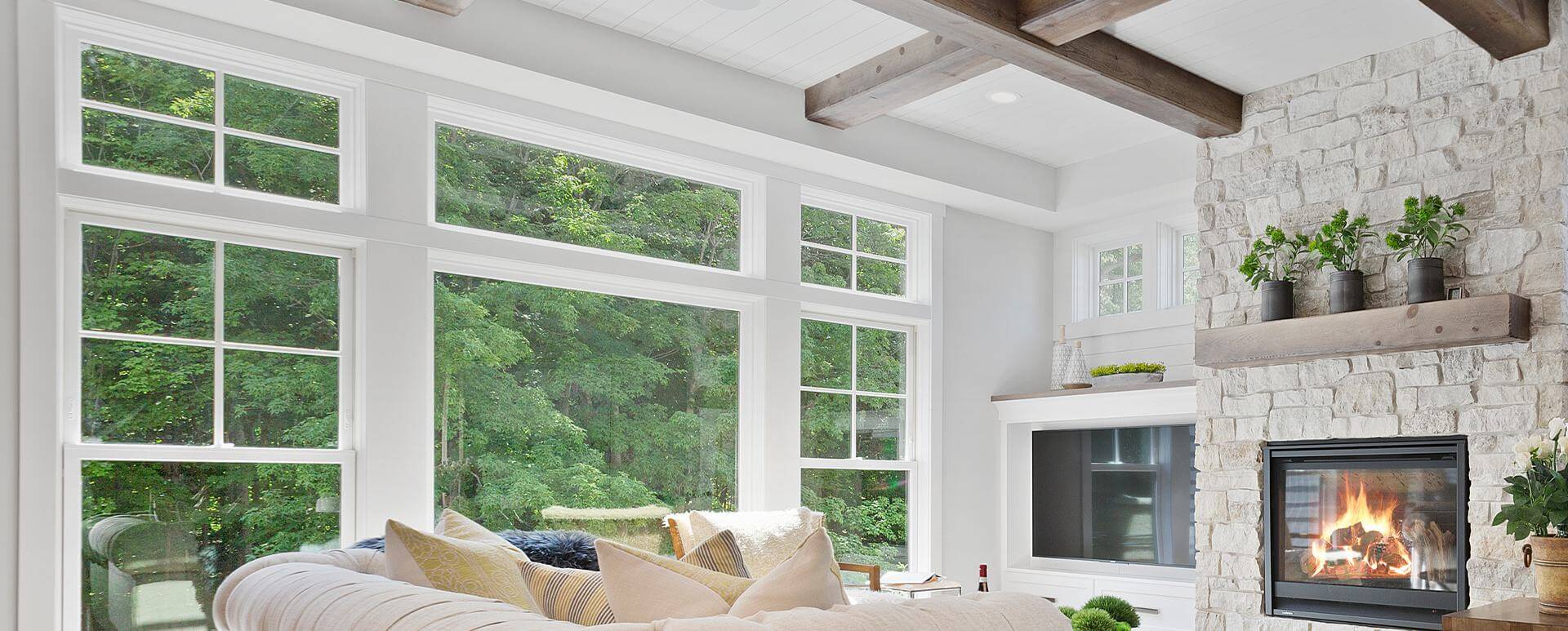
Transom windows are among the oldest and most architecturally significant window elements in Western residential and commercial design. They appear across virtually every major historical style — Federal, Greek Revival, Georgian, Victorian, Craftsman, Mission, Art Deco, and contemporary — because they solve a fundamental architectural challenge: how to bring natural light and air into a space without compromising privacy, structural integrity, or the function of the primary door or window below.
MILLENNIUM® designs and fabricates custom transom windows in fixed and operable configurations, across all three frame series, in a full range of glazing options including clear, decorative, stained, beveled, and Low-E insulating glass.
A Brief History
Origins and Early Use
Transom windows predate mechanical ventilation, electric lighting, and air conditioning by centuries. In medieval European architecture, the transom bar was a practical necessity — large openings required a horizontal member to carry the structural load, and the space above this bar was naturally glazed or left open for light and air. In ecclesiastical and civic architecture, elaborate tracery filled the transom space with stained glass of exceptional quality and complexity.
In American residential architecture, transom windows became particularly important during the second half of the 19th century, when urban row house construction created a specific architectural problem: buildings that were long and narrow, oriented with their primary windows only at the front and rear facades, left the interior rooms — often three or four deep from front to back — with no direct access to exterior walls and no natural light or ventilation source.
The solution was the interior transom window. Installed above interior doorways throughout the house, these operable transoms allowed air to circulate from room to room even when doors were closed for privacy, and admitted borrowed light from rooms that did have exterior windows into those that did not. In a time before air conditioning, this passive airflow management was essential to livability in hot summers. Interior transoms above closed bedroom doors allowed parents to hear children in adjacent rooms. They allowed cooking odors and warm air to exhaust toward cooler parts of the house.
The Decline and Return
The widespread adoption of mechanical air conditioning from the 1950s onward eliminated the primary functional justification for operable transom windows in new construction, and they largely disappeared from American residential design for several decades. Fixed transoms retained a decorative presence — particularly in the fanlight compositions above entry doors that are a signature feature of Federal and Colonial Revival architecture — but the operable interior transom was effectively abandoned as a standard building element.
Today, transom windows are experiencing a well-earned revival in both new construction and renovation. The reasons are multiple: a renewed appreciation for passive ventilation strategies and biophilic design; the influence of historic preservation on new architectural work; the desire of homeowners to maximize natural light in rooms that would otherwise be dark; and a growing recognition that the quality of natural light — its angle, its softness, its variation through the day — is a dimension of interior comfort that electric lighting cannot replicate.
Types of Transom Windows
Rectangular Transom The most common form. A simple horizontal band of glass spanning the full width of the door or window below, typically 12 to 18 inches tall. Rectangular transoms work with virtually any architectural style and are the standard choice for contemporary, transitional, and craftsman applications. They can be divided with vertical muntins to create a multi-pane composition, or left as a single unbroken pane of glass.
Fanlight (Semicircular Transom) A semicircular transom window with radiating muntins that echo the shape of a hand-held fan. The fanlight is one of the most recognizable and refined elements of Federal and Adam-style American architecture, typically positioned above a formal entry door flanked by sidelights. Authentic fanlight designs use elliptical or semicircular arches with muntins arranged in radiating patterns that were historically crafted from lead or thin wood and are today replicated in aluminum or composite materials. A well-proportioned fanlight above a formal entry is one of the most powerful single architectural details available in residential design.
Elliptical Transom Similar to the fanlight but with a flattened elliptical arc rather than a true semicircle. The elliptical transom has a softer, more horizontal character that suits wider door openings and works naturally in Federal, Italianate, and transitional architectural styles.
Gothic Arch Transom A pointed arch profile above the door, characteristic of Gothic Revival, Tudor, and Victorian architecture. Gothic transom profiles range from steeply pointed — nearly triangular — to gently pointed forms that read as almost semicircular at first glance. When combined with tracery muntins in appropriate historic profiles, a Gothic arch transom is one of the most character-defining architectural details available for period restoration work.
Rectangular with Decorative Grille A rectangular transom glazed with clear glass and fitted with an applied or integral grille — a pattern of intersecting bars that divide the glass visually without creating separate panes. Grille patterns range from simple rectangular grids to elaborate geometric compositions. This is the most flexible transom type for matching existing window grille patterns throughout a house.
Art Glass Transom A transom glazed with stained, leaded, beveled, or etched art glass rather than clear float glass. Art glass transoms were a signature feature of Queen Anne, Arts and Crafts, and Mission-style architecture, and remain appropriate and highly effective in historic restorations and in new construction seeking to establish a distinctive character. MILLENNIUM® can fabricate art glass transom units to custom designs or to match existing historic patterns.
Fixed vs. Operable Transoms
Fixed Transoms Fixed transoms are sealed, non-operable glazed panels. They admit light and, in combination with other architectural elements, contribute to visual composition — but they do not ventilate. Fixed transoms are appropriate wherever light admission is the primary goal, wherever the transom position makes operation impractical, and wherever architectural proportion calls for a transom that would be too narrow or too shallow to operate effectively. The vast majority of exterior entry door transoms in modern construction are fixed.
Fixed transoms have the energy performance advantage of a completely sealed perimeter — no movable weatherstrip joints, no operational clearances that can develop air infiltration over time. A quality fixed transom with double-pane Low-E glazing is an extremely airtight unit that contributes positively to the building envelope’s overall thermal performance.
Operable Transoms Operable transoms open to allow ventilation. They are typically hinged at the top (operating like an awning window) or at the bottom (operating like a hopper window). Top-hinged transoms swing outward, directing incoming air upward — useful for admitting fresh air without creating drafts at head height below. Bottom-hinged transoms pivot inward at the bottom, directing incoming air upward into the room — the typical configuration for historic interior transoms above interior doorways.
Operable exterior transoms are particularly valuable in climates with warm, breezy seasons where natural ventilation is preferred over mechanical cooling. An operable transom above an entry door, combined with operable windows on the opposite side of the entry space, creates a cross-ventilation path through the building even when primary doors and windows are closed or partially open — the same passive airflow principle that made interior transoms indispensable in 19th century row houses.
Both top-hinged and bottom-hinged operable transoms should be equipped with a simple, accessible operating mechanism — a crank, chain operator, or push bar — since transoms are by definition positioned above normal reach height. MILLENNIUM® specifies appropriate operating hardware for all operable transom installations based on the mounting height and accessibility requirements of the specific project.
Where Transom Windows Add the Most Value
Entry Doors and Sidelights The single most impactful application of a transom window is above a primary entry door. An entry composition consisting of a door with flanking sidelights and a transom above — the traditional “surround” composition — is architecturally complete in a way that a door alone is not. The transom admits daylight into what is often a dark foyer or entry hall, makes the entry appear taller and more generous, and signals the quality and character of the house from the street. A fanlight or elliptical transom in this position is a classic detail that has been architecturally valid for over two centuries.
Interior Doorways Operable interior transoms above bedroom, study, and living room doorways restore the passive ventilation function that made them standard in pre-air conditioning residential construction. In contemporary green building practice, interior transoms are increasingly specified to improve natural ventilation, reduce HVAC loads, and allow fresh air to circulate through a home without compromising the acoustic privacy of closed interior doors. They also admit borrowed light from brighter rooms into interior spaces — a hallway that would otherwise be entirely lit by artificial light gains meaningful natural light from an interior transom connecting it to an adjacent sunlit room.
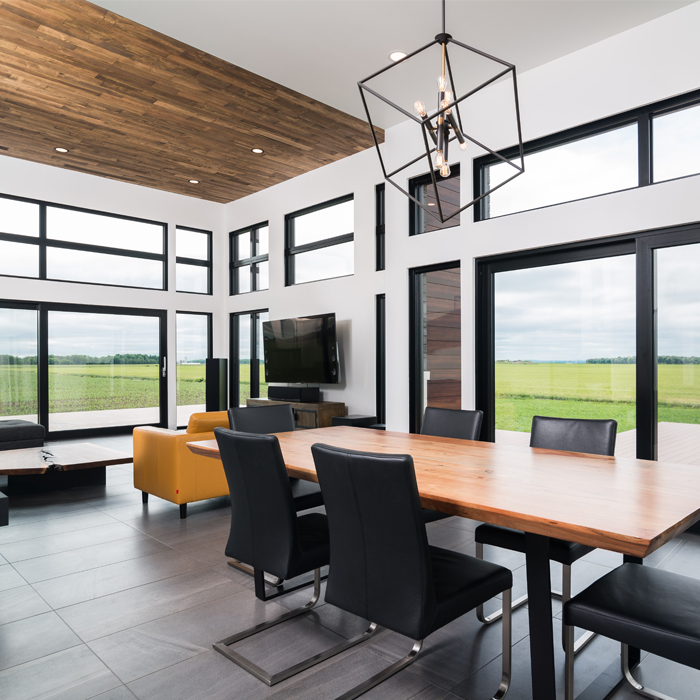
Rooms with High Ceilings In rooms with 10-, 12-, or 14-foot ceilings, a door and wall above it that extend to the full ceiling height can feel heavy and institutional. A transom window above the door — whether interior or exterior — breaks this wall of solid material with light and glass, softening the massing and making the ceiling height feel intentional and grand rather than simply tall.
Kitchen Pass-Through Windows A transom-style fixed or operable window installed in an interior wall between a kitchen and an adjacent dining room or living space functions as a pass-through that allows visual and acoustic connection between rooms without a full opening, and admits light from the kitchen’s brighter side into the dining area. This application is particularly effective in open-plan spaces where a partial wall is retained for acoustic separation.
Stairwell and Landing Lighting A transom window on a stairwell wall — either to the exterior or to an adjacent room — is one of the most effective ways to bring natural light into a staircase, which is often among the darkest interior spaces in a multi-story home. Even a modest fixed transom at landing height can transform a dark stairwell with meaningful natural light.
Energy Performance Considerations
Transom windows in exterior applications must be specified with the same attention to energy performance as any other exterior glazing. Because transoms are typically positioned high on the wall — above head height — they receive more direct sky exposure than windows lower on the wall, which can increase both solar heat gain in summer and radiant heat loss in winter if the glazing is poorly specified.
MILLENNIUM® exterior transom windows are available with the full glazing specification package: double-pane Low-E insulating glass with argon gas fill, warm edge spacer bars, and butyl rubber perimeter seals as standard. Low-E coatings should be selected with the orientation of the transom in mind — solar control Low-E for south- and west-facing high transoms that receive significant direct sun, passive Low-E for north and east-facing transoms where solar gain is a benefit rather than a liability.
Because transom windows are often fixed and therefore fully sealed, their air infiltration contribution to the building envelope is minimal — a significant energy performance advantage over operable windows of equivalent size in the same position.
For interior transoms, thermal performance in the traditional sense does not apply — the glass separates two conditioned interior spaces rather than conditioned interior from exterior. The relevant performance considerations for interior transoms are acoustic performance (laminated glass provides meaningful sound isolation between rooms while still transmitting light) and privacy (frosted, textured, or art glass provides light transmission with visual privacy where needed).
MILLENNIUM® Custom Transom Specifications
Every MILLENNIUM® transom window is custom designed and fabricated to the exact dimensions and arch or profile geometry of your opening. Because transom windows are almost always part of a larger architectural composition — above a door, alongside sidelights, or incorporated into a multi-unit window assembly — they must match the frame profiles, hardware finishes, and glazing specifications of the surrounding units precisely. MILLENNIUM® ensures complete visual and technical consistency across all elements of a custom entry composition or window grouping.
Frame Series — A-Series (thermally broken aluminum), M-Series (aluminum exterior / wood interior), and W-Series (solid wood / aluminum exterior cladding). All three series are available in both rectangular and curved arch profiles.
Glazing Options — Clear double-pane Low-E insulating glass (standard); decorative leaded, beveled, or art glass panels; frosted or textured glass for privacy applications; laminated glass for acoustic separation in interior transoms; tempered glass where required by code; and ballistic-resistant glazing for security applications.
Grille and Muntin Patterns — A full range of standard and custom grille patterns, including rectangular grids, diamond patterns, colonial, prairie, and custom historic replication profiles. Applied grilles are available for retrofit applications where the existing window profile must be matched.
Contact MILLENNIUM® Windows and Doors for a free consultation and appraisal. Whether you are designing a complete entry surround from scratch, adding transom windows to existing interior doorways, or restoring historic transom details to an original condition, our team will guide you from initial design through fabrication and installation.
Phone: 918-582-5025